Abstract:The project »avArc. A Landscape of Memory and Temporalities« asks how to deal with the transformation of memory and places of memory as well as their mapping and archiving. The decisive factor for our considerations and plans for the project was the way we deal with sites of Nazi crimes. In addition to the concentration camps established in the canon of knowledge, there are numerous places where often little or nothing at all remains to remind us of what happened. However, almost everywhere you could mark on a map there is a place of history and stories related to Nazism that should not be forgotten. Based on these considerations and our artistic and theoretical practice, we would like to use artistic research at the interface between local reference and digitality to address the history of historical places and places of remembrance that are disappearing, invisible or being prevented. The project sees and positions itself as an activist and anti-fascist project that is based on commons and functions as an open source archive. The aim is to form a growing community through which the content of the project is shaped and thus to find participatory strategies at the interface of analogue and digital, through which these places inscribe themselves into the archive of collective knowledge, update it and record existing cartographies.
Keywords:Affective archives; afterlife; memory work; Commons; record; artistic-technological research; Participation
In the project »Affective Archive. A Landscape of Memory and Temporalities«, avArc for short, concerns us with questions about how to deal with the transformation of memory and places of memory as well as their digital recording and archiving. With our work we would like to contribute to bringing what Aleida Assmann calls “the transformative power of memory [which] can be conveyed with the knowledge and the level of knowledge of the present”1 into the increasing overlap of analog and digital life.
Since mid-2020 we have been in the process of collecting and researching, in the midst of a seemingly endless and ever-growing amount of material and the resulting considerations, experiments and developments. This text describes the project and provides insights into everything we have done so far and want to do in the future.
The title of our project refers to the nature of our work - as an affective one that uses artistic-research strategies to try to create micropolitical shifts in memory and its perception.
We are not just us as the authors of this text and the initiators of avArc, but above all a growing community that is helping to shape the project. The project's online platform2 can be used as a place for activist networking between various initiatives and people who are involved in remembrance work. Since history is never 'neutral' and we as artistic researchers do not claim neutrality in our project, we clearly position our work as anti-fascist. Stories that we collect and process come from this positioning. Stories that aim to create perpetrator-victim shifts are not told in our archive. The avArc platform is intended to open up a lot of space for interaction and the own actions of our allies participating in the project. However, there is also an editorial team that ensures that no anti-Semitic, racist, fascist and nationalist narratives are permitted and also protects against sabotage from these directions.
Our method is therefore based on art. Through the interdisciplinarity of art and science(s), artistic research3 is able to generate information, but also to explore and exceed the boundaries of science, to bring in subjective assessments and our own positionings, which are of course also part of all scientific discussions, and to also start from these positionings when we look at the research object together with many people involved, most of whom are not anchored in academic contexts. Knowledge that is collected in the project is also knowledge that can no longer be clearly proven or is imagined, associated and in any case strongly linked to affects. The artistic-research approach to the material makes it possible to take into account his claim to a very wide range - namely to always collect as much as possible everything that exists at a certain place and never to fully understand the resulting circumstance. We consciously decided against restrictions on specific cities, countries and time periods and instead chose a path that networks data, places, connections, continuities, people and projects that deal with the topic in an activist and/or scientific, artistic, etc. way and collects, stores and shares the resulting knowledge - knowing that there can always be gaps, open questions and even errors, which is why the active participation of the community is so valuable and important. Our project is also heavily influenced by information technology processes that are essential for the visualization of history(s) and the generation, storage and preservation of (archival) data.
In collaboration with initiatives that fight against forgetting, we want to develop subversive strategies and expose memory and the efforts to prevent it. The aim is to make visible where nothing is visible anymore and, to a certain extent, to exert pressure in places where memory is prevented or repressed.4
Starting position, motives, questions
"Contrary to the popular opinion that the history of the concentration camps and other Nazi forced camps has been thoroughly researched, there are still countless blank spots in the mapping of our knowledge about the members and forms of the repressive apparatus, with regard to both its intention and its dimensions as well as its function."5
This is the first sentence in the 9-volume work dealing with and documenting the concentration camps: “The Place of Terror. History of National Socialist Concentration Camps", which Wolfgang Benz and Barbara Distel published in 2005. Almost two decades have passed since 2005, and the coming to terms with the concentration camps and the history of the terror of Nazism6 has been worked on and discussed in many ways by a wide variety of disciplines, including art. The way in which the collective memory of a social group is condensed is questioned from different sides about how to deal with these places of remembrance, which Pierre Nora introduced as a concept in the 1980s. 7 8
In various places in cities, larger communities, etc., knowledge transfer about places of remembrance already exists and is growing very comprehensively. We do not want to ignore these places and the relevant remembrance work associated with them, but rather include them in our work and network with the projects and actors. Nevertheless, there are still sites of Nazi crimes that stand next to the concentration camps established in the canon of knowledge and where often little or nothing at all remains to remind us of what happened. In most cases, there is no contextualization or knowledge transfer in these places and if there is, it comes from local initiatives, activists and/or the descendants of the victims. This work is usually carried out using one's own efforts and resources, and is financed precariously, if at all, and is often met with strong resistance. So what is remembered is always contested.9
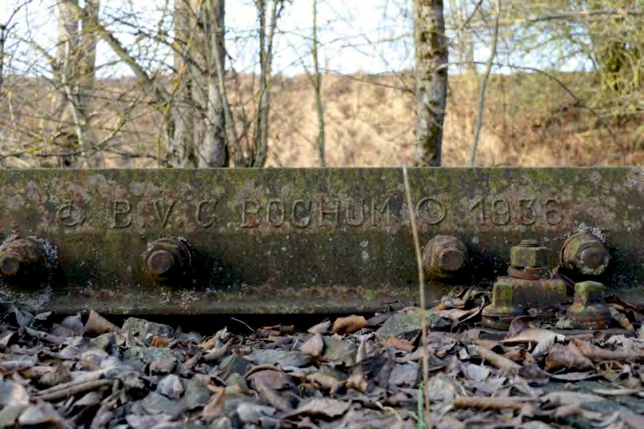
Nevertheless, every place that could be marked on a map is a place of history and stories that should not be forgotten. This idea of being in the world and knowing that there wassomething in every place you were was crucial to our thoughts and plans for the project in terms of dealing with those places thatare always everywhere.
Based on these considerations and our artistic and theoretical practice, we would like to address the history of historical places as places of remembrance that disappear, are invisible or are prevented, at the interface of local reference and digitality. Our aim is to find strategies through which the histories of these places can be inscribed in, updated and updated by the archive of collective knowledge. By this we mean specifically that it should no longer be possible to be in places that are connected to the history of the crimes of Nazism and anti-fascist resistance without being able to know this.
In our project, the introduction and the transfer of knowledge take place primarily digitally and geographically and thus through an approach of increasingly relating one's own body to historical places through a connection to their history. Areas particularly relevant to our project include the transformation of memory through digitalization, the end of contemporary witnessing, as well as the associated psychodynamic and affective processes, which are essential for questions of knowledge transfer and intervention, recording10 and shifting what is visible or invisible, how and where. Accordingly, in our project we want to express emerging questions of the present and the future. We work on relating the analogue and virtual worlds and their overlaps and making them effective for each other.
In order to describe the avArc project and go into all the areas that are important within it, we will now look at the terms that make up the title.
An affective archive
»Once you see affect moving in the archives, there is no longer any rest within them. This can be both, a source of terror and delight […].«11
In their book “Lexicon for an Affective Archive,” Giulia Palladini and Marco Pustianaz understand affect as a horizon that can be released in any archive, suspended between materiality and immateriality, conversation and transformation, and as a responsibility towards as yet unknown directions in our own archiving practices.
What is an affective archive? We view our practice at the interface of artistic research and information technology as archival work in several respects: On the one hand, in the project we work with historical and time-related archive material, on the other hand, collecting, recording and categorizing places and their stories is also work on an archive that sees itself as constantly growing, in a constant process of updating and never complete or conclusive. It is filled with and for the commons, and thus inherent in it are contradictions, conflicts, inexplicable questions, and also affects that are part of all collective work processes. We understand the archive with Michel Foucault's concept of archive "first of all as the first law of everything that can be said"12 and our work with Jacques Derrida as manically searching, as an archaeological excavation site13 that reveals more and more the longer, more far-reaching and more complex the digging is. It is therefore essential that perspectives and voices are part of the project that we do not have in our situation and cannot bring into the project. According to Derrida, the essential starting point for the archive of memory, events and excavation material is, according to Derrida, “burning with curiosity and desire to let people know and to archive that”14. In relation to artistic and activist practice, we understand archival work as a never-ending search for stories that have not yet been integrated into archives and that need to be found and brought to the surface. The importance of the affective in the archive is inherent in our work. Knowledge and its assemblies in archives are never neutral and posited, and never without affects that occupy them and that can emerge when one engages with them -a source of terror and delight, as Palladini and Pustianaz write. Dealing with history and working through archive material affects people on many levels. Just as music, smells, or other sensory impressions can evoke immediate affects, so can knowledge. Experiencing something new, learning something, understanding a context or developing special attention to certain impressions is an affective process.
There is also a strong potential for conveying knowledge in affect. It makes a difference how we encounter knowledge about a particular topic or circumstance, in our case about the history of places, how it is conveyed and whether we are affected by it. Gilles Deleuze and Felix Guattari describe the phenomenon of affectation as follows: an object, subject or a certain practice can have a direct effect on the body and bring it into astate of becoming.15 This can arise through art and the form of knowledge transfer associated with it, which in its expression has the potential to shift the body together with art. Affections occur; according to Deleuze, they cannot be triggered or manipulated voluntarily, which means that there is no guarantee of affect and not every person is affected in the same way (let us think again of smells or noises that trigger a certain memory in us, while they have no effect at all or have a completely different effect on other people). But there is a “strong affective presence”16 inherent in archival work with memory and temporality, through which updates and shifts in our own perception and knowledge can arise.
In her text “The Transforming Power of Remembering,” Aleida Assmann writes, among other things, that with the “return of memory of the Holocaust […] memory has changed its quality.” There is no turning back from this development. We have crossed shadow lines that have irreversibly changed our sensitivity and our consciousness on the basis of the norm of human rights. 17 Finding strategies for how this affective mediation of knowledge and passing on of memory can take place, learning to see and see traces that point to the omnipresence of Nazi crimes, is an essential part of our project and also a reason for the particular relevance of the artistic discussions, which are effective as a link between archival work, affectation and mediation - with Okwui Enwezor can function as "historical agents of memory"18.
A Landscape – Geographical archive of terrestrial data
For the psychoanalyst and art and cultural scientist Suely Rolnik, the “aesthetic experience of the world” lies in making oneself vulnerable as a body to its environment, which puts it in a “state of art”. Because “[t]he body does not find peace as long as what demands passage is not brought to the surface of the current cartography, breaks its siege and changes its contours.”19 The “recording of cartographies” is here the task of archiving in artistic practice. In this way, in the constant movement and change of the archive, affects can be made effective and while some things fade away, new fields open up at the same time.20 The digital recording and thus the showing of historical connections in the digital system of permanent location is an essential part of the archive. In this way, we include the places that are associated with the crimes of Nazism and also with the resistance against them in the project's virtual mapping, following the approach of many projects by memorial sites, institutions, artists and people who deal with the crimes of the Nazi regime and the resistance on a digital level. We call these places “sites” – translated, site means “the property, the location, the place, the place, the site, the terrain, the construction site,” etc. These terms seem to us to be extremely appropriate to describe the places that we visit and incorporate into our database. We also like the double level of meaning in the pronunciation of the word: site also sounds like “sight”, the view of something that you simply cannot see if you do not know that it is or was there, and the view of more once the story(s) of places are shared.
Based on the aforementioned anthology »The Place of Terror. History of National Socialist Concentration Camps" by Wolfang Benz and Barbara Diestel, we use the "Encyclopedia of Camps and Ghettos" 21, a publication project of the United States Holocaust Memorial Museum, as well as online sources from local initiatives and projects as a further basis for our research. When mapping sites and gathering related information, we refer to this source material.
We also research places that allow certain clues to history, such as tracks that are in the forest or a field and no longer lead anywhere, half-ruined buildings that allow us to draw conclusions about this time or those that we hear about orally in conversations with people. We call these places, whose knowledge is in no way conveyed, but rather hidden or even prevented, “voids”. The blank space, the missing space, the gap - emptied, voided, annulled, invalid, vacant and legally ineffective - are some translations of this word. The aim of the project is to jointly uncover the stories of these gaps and to “occupy” them with memory(s), which in the best case scenario not only involves closing the gaps in the collective memory of places, but can also have an impact on the legal effectiveness of repressed history(s). We document the sites and voids that we visit photographically and try to make statements in our work about whether and to what extent knowledge is imparted at this point. We evaluate any signage for the location, what information can be found there - ultimately its visibility and how easy it is to find - and how geographically precise the information (e.g. a memorial plaque or a memorial) corresponds to the actual location of what happened in the past.
After the field research, we enter the exact coordinates of the location on our map and also link the resulting point with all the information and materials that we were able to find. We also link to existing sources. This creates a landing page for each point in our online archive, which contains further data: publications, websites (mostly from local initiatives and associations that deal with the respective region and have developed knowledge and impart it), artistic projects, as well as material from and about history, such as correspondence, audio tracks of interviews and the like - all of this should be part of this archive.22 During our research, it is noticeable that many sites have not been made recognizable on site. For example, the former SA protective custody camp at Hochkreuz in Cologne Porz was one of the first prisons in which, from 1933 onwards, mainly communists were imprisoned, tortured and murdered. In addition, after 1942, the same place was used as a transit camp for Jews who were to be deported from Deutz train station.23 As is often the case, there is a website that details the history of the place, but there is no reference (such as a sign or the like) to this history on site; instead, when we visited this place on August 20, 2021, the building was privately owned and used commercially. In 2022, demolition of the buildings on the site began, prompting calls to build a memorial instead.24
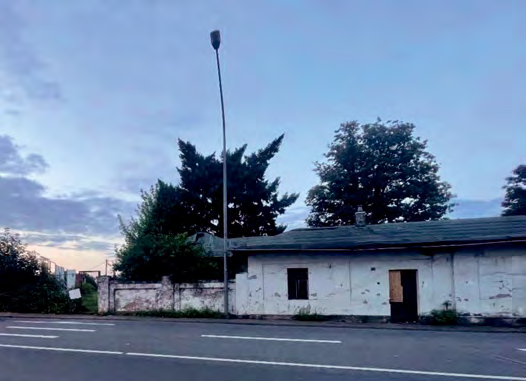
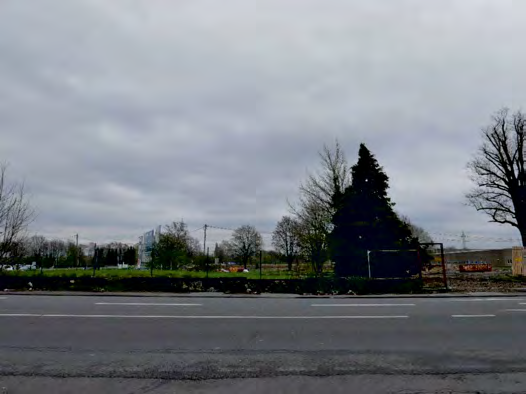
Places like this do not convey their history when you visit them, which encourages loss of knowledge and thus oblivion. This is accompanied by the danger of no longer or even less ability to recognize the extent of the stories in the area25, this feeling that arises that there was something everywhere.
Our prioritized intention is to collect and demonstrate the breadth of knowledge and only in a further step to go into as much depth as possible about the individual places. The knowledge about the places, which areeverywherebut notvisibleeverywhere, should be democratized and made accessible to as many people as possible, ideally to everyone who wants to access it. This can then be accessed, for example, via QR codes left on site. In this context, these could be understood as the smallest possible and yet unmistakably coded references to places of remembrance, behind which a chain of virtually gathered knowledge from as many participants as possible and from different perspectives, but of course anti-fascist and anti-racist due to the topic, is revealed. Our target group is all people who find their way into this place. In this way, young people in particular should be able to discover the topic in their surroundings and help shape how they deal with it.
Memory
»Urgently and passionately, those of us working on memory and transmission within and beyond the study of the Holocaust have discussed about the ethics and the aesthetics of remembrance in the aftermath of catastrophe. How do we regard and recall what Susan Sontag has so powerfully described as the “pain of others?” What do we owe the victims? How can we best carry their stories forward, without appropriating them, without unduly calling attention to ourselves, and without, in turn, having our own stories displaced by them? How are we implicated in the aftermath of crimes we did not witness ourselves?"26
These are the questions that Marianne Hirsch asks in the introduction to her book “The Generation of Postmemory. Writing and Visual Culture After the Holocaust," we join in as we think about what remembering can look like and be shaped in the future. It is necessary to critically reflect on what means are now available for this and what are necessary to draw the interest of future generations to the topic, especially in view of the transformation that memory work in relation to the Holocaust, the crimes of Nazism and anti-fascist resistance is undergoing, especially as a result of both digitalization and the end of contemporary witnessing. The phenomenon ofPostmemory, coined by Marianne Hirsch, the transgenerational transmission of memory to the second (and further) generation(s), who have not experienced history themselves but have internalized the past in their family and social environment through cognitive and affective transferring processes.Postmemory, as the afterlife of memory, acts as a shift, overlap, and sometimes even overwriting of one's own childhood biography with events experienced by parents or grandparents have27. This dynamic not only transforms history into memory, but also enables memories to be shared across individuals and generations, thus approaching memory in its affective power and psychological effects.
Temporalities – temporalities
If you intersect a line with a plane, you get a point. Every point that we mark on a map for our project is a point of this kind, because if you look at the history of a marked place, a timeline emerges, a series of events that this point represents. So it is only a point on the map when viewed vertically from above. If you tilt the view, he begins to tell his story along a straight line, a timeline. If one could overtake the light that a place has reflected into infinity, one would be able to see into the past. In order to come as close as possible to this idea, we are working with such a model on an information technology mapping of space and time for our purposes.
The places we show on the map usually undergo serious changes as their existence progresses. For example, a functional building, such as a warehouse, becomes a camp for forced laborers over the course of its history, a camp for displaced persons after liberation and finally a memorial site - or, if this was prevented, a private area used for commercial purposes, where nothing reminds of what happened or conveys the history of the place. One example is the Langerhaus G in Hamburg, which was built in 1903 by the municipal Hamburg Free Port Warehouse Company as a general cargo storage facility, was a subcamp of the Neuengamme concentration camp from June 1944 until the camp was liberated by British troops on April 29, 1945, and is now a memorial site, but it is increasingly falling into disrepair and its demolition was narrowly prevented several times by activists. The “Initiative Dessauer Ufer” is committed to preserving Warehouse G as a memorial site.28 We try to record processes of this kind in order to enable both a data-based and a graphical representation of the linearity of time. In order to be able to follow the different storylines that affect a location, we form clusters of such timelines, which are then displayed in their entirety in the archive. By further classifying the timelines, a tool is created that can be used to visualize historical processes with a view to their geographical location in the area along a period of time and to ask questions of the archive.
Since our work is community-based, these data structures also help to gather knowledge through the decentralized work of many. Processes do not have to be researched from the beginning to the end before they find their way to the public, but fragments of knowledge can also be filed, the accuracy of which is assessed and which, with ongoing work on the archive, come together to form a larger whole. Thus, we continually work together on a visualization of history that is always in a process of transformation and updating, forever incomplete, searching and questioning.
With these methods, which we are constantly innovating and developing, we hope to come up with new forms of presenting history and conveying knowledge, as well as opening up new ways of data analysis. We see the resulting opportunity to present historical events or facts in a time-related manner based on the database created in this way - for example by using them within apps for mobile phones - as an important building block in the effort to use media in a contemporary way and to make the transfer of knowledge as accessible, democratic and participatory as possible.
Seeing history in the present – use and visualization of archive data, activist networks digitally and analogue
Infrastructure and accessibility play a central role in the project. Without elaborating on this point in this article, it is important to note that the project design from the outset is such that both imagery and geographical and historical data that are generated and collected will be stored in a long-term archive that will be certified as such. Since the archive's database is largely created by a community in order to be generally accessible, this content is also made available under a Creative Commons license. The democratization of knowledge and practical, barrier-reduced access to it are central aspects of the entire project.
Websites
The project is located digitally in three places: a homepage29 represents the project in terms of content and is therefore also the entry point for using and participating in the project, to which it links: The use of the community platform30 is based on common social media, such as Facebook, Instagram, etc. There it is possible to take part in the avArc. At this point, users network in existing and/or self-created groups in various areas that help shape the avArc: For example, there is the Activist Networking group, which, as already mentioned at the beginning of the text, can be a platform for exchange between various initiatives and people who are involved in memory work.
The Fieldresearch group looks for sites and voids that it researches and shares with the community, anotherResearch group looks for as many sources of all kinds as possible - literature, websites, project documentation of initiatives, audio tracks, interviews, films, artistic and activist interventions, to name just a few examples.
All of these sources are maintained by aData Update and Care group in avArc, which takes care of updating and growing the landing pages for the sites. This happens at the third digital location of the project, the Knowledge Base & Search Engine31, which forms the publicly visible part of the archive. It contains the map on which sites are listed and from which you can reach a landing page at each point. It contains information and images on this point and links to all sources that the community can find on a point, so that the knowledge of as many people as possible from various anti-fascist perspectives and contexts is gradually collected and so the virtual map of the avArc but also the corresponding cartography of the reality of our present is recorded.
Signs, stickers and QR codes – linking analog and digital
The interface between the digital and the analog world is formed by signs with QR codes on them. We particularly want to mark voids, the places where history of violence and/or resistance has taken place but nothing on site refers to them, with signs. They are reminiscent of signs that identify listed buildings - this is intentional because people already recognize this symbol and therefore unconsciously realize that there is something to learn about a building at this point. We use this strategy to subvert the non-showing, non-remembering, non-conveying with “official-seeming” aesthetics. In addition to the meaning of remembrance that lies in the word, monument should also be understood as a suggestion to think about the places in which one is staying. About what they are used for and by whom today and about their history. Because in every place where you see the signs in public space, you become more aware of the fact that no spot is free and untouched by the history of Nazi terror -that there was something everywhere. The QR code in the sign then refers to the knowledge base page and thus to all the data and links that the community collects about the respective location. The avArc project only makes sense and is possible together. Through the community platform and the exchange with people involved in the project, we hope to always find those who are close to a place where a QR code should refer to the digital archive, and at the locations where it is possible for them to attach the sign in question if it cannot be hung at the corresponding location itself. It will contain directions that show that the location linked in the QR code is not in this location, but in another nearby location. Another way to mark on-site is to use stickers, on each of which a QR code refers to the coordinates of the location and one to the associated landing page. They can be located anywhere other stickers are stuck: lanterns, bus stops, houses, bars, etc. and are part of an activist tradition and practice. This is how the power of collective action32 comes into effect, which undermines prohibitions, rules and potentially subsequent sanctions and which succeeds in registering a place even when this seems impossible.

Artistic discussions and interventions
Artistic discussions and interventions that deal with these places in an artistic and research manner and show what should not be forgotten form part of the core of the project, not least because we locate the avArc project itself in artistic research. Artistic work with history and archive material, especially in political art, is a wide-ranging field that also includes coming to terms with and dealing with the memory of the Holocaust. Here, too, there are numerous artistic works that we link to in the knowledge base as well as literary sources, scientific projects, etc.
An example of this from our own practice is the painting seriesThe Affective Afterlife of Voids and Traces,which was shown in the exhibition of the same name from September 24th - 29th, 2022 at the Kunstraum orbit, Hamburg Altona. The first exhibition of the workThe Affective Afterlife of Voids and Traces deals with five places that show traces of Nazi crimes: tracks that no longer lead anywhere, but which, according to detailed research, were connected to surrounding concentration camp subcamps. Remains of bunkers in forests, lanterns that can be assigned to places of forced labor. There is often no or insufficient knowledge about them in these places. By inadequate is meant what can always be felt but is difficult to put into words: because it is not uncommon for the feeling that places of remembrance are only created to the extent that “just has to be”. This finds expression in a variety of forms: the wording chosen all too often seems as if the Nazis had “landed with a UFO” one day. As if not every city, every place was an actively knowing and acting part of this regime. These texts still attempt to shift the blame to intangible "third parties", the Nazis - while disguising the fact that it was the city residents themselves - and to instead focus on the cruelty of the war itself (which was bad for "everyone") and to emphasize Germany's exemplary culture of remembrance. There are countless examples of these texts at memorial sites, one that makes "the National Socialists" seem like a group that does not belong to the city is the text on the ash scrap fountain in front of the Kassel town hall, a work of art for documenta 8 and documenta (13) by Horst Hoheisel, which is in the same place with the one on December 9th. The fountain was destroyed by the Nazis in April 1939 and was donated in 1908 by the Jewish Kassel entrepreneur Sigmund Aschrott to build a new town hall. Horst Hoheisels lowered the negative form of the well into the ground to mark the break and the emptiness at this point. »As an open, non-healing wound, the fountain is now a place of negative presence, in the middle of the city in front of the town hall. There is nothing to see, the monument is missing. And as Hoheisel himself writes: 'The real monument is the passer-by who stands on it and thinks about why something was lost here.'".33 What is also interesting about this place is the text that the city of Kassel embedded in the ground in front of the fountain in 1988. Unfortunately, the memorial plaque on the ground in front of the fountain is neither clearly visible nor does it deal with the history of Nazism in Kassel. The following can be read on the board: »The ash scrap well. In 1908, the town hall architect Karl Roth built a 12 meter high fountain at this point, which the Jewish industrialist Sigmund Aschrott had donated to the city of Kassel. In 1939 the National Socialists demolished the “Judenbrunnen”. Shortly afterwards, the city administration had the fountain removed down to its sandstone frame. In 1987, the Kassel artist Horst Hoheisel recreated the fountain as a negative form of the original. The ash rubbish fountain sunk into the ground is intended to serve as an open wound in the city's history as a reminder of injustice suffered and a warning. City of Kassel 1988.«34 It sounds to us as if the city of Kassel suffered injustice at the hands of the Nazis, who unfortunately “demolished” their beautiful fountain at this point. However, the ash well was destroyed by Nazis, citizens of Kassel. Only the fountain basin remained, which was used as a flower bed and fountain after the war, thus overwriting and suppressing history until Horst Hoheisel's documenta artwork. Further examples are of course all war memorials, which often read "in memory of all the victims of the world wars", although it is difficult to imagine that the cynicism of this formulation could not be noticed. Of course, these texts were not written today, but decades ago and since then there has been a lot of fighting for and around remembrance work and places. But the texts continue to exist, shape cityscapes, and often remain as they are.
Most of the time nothing happens to the more and less visible traces of Nazism. They are left to decay, incorporated or demolished. They are made invisible without actually being hidden. People are content with letting them “sink” into the forest floor, between tree trunks, using their land in new ways.
The afterlife of the empty spaces, the traces and their stories can still be felt, visible and audible as soon as one knows about their existence. Then it is as if they are shining between the branches or in a row of houses and if you follow these tracks, in most cases they lead to precisely these places of Nazi crimes.
The motifs of the painterly works, designed as spatial installations, are traces that can be found in five of these locations: two paintings for Kaufering I and IX, which were part of the Kaufering I-XI subcamp complex near Landsberg am Lech, show a dilapidated ammunition factory building, which can be seen at the end of a street between parked cars, trucks and garbage cans behind the trees, as well as rails in the forest that run close to the camps in the forest. They formed the basis for the transport of goods for forced labor in the Dynamit AG ammunition factories and to the construction sites of the Walnuß II, Diana II and Weingut II bunkers. In addition, people were transported to Dachau and Auschwitz for forced labor.35
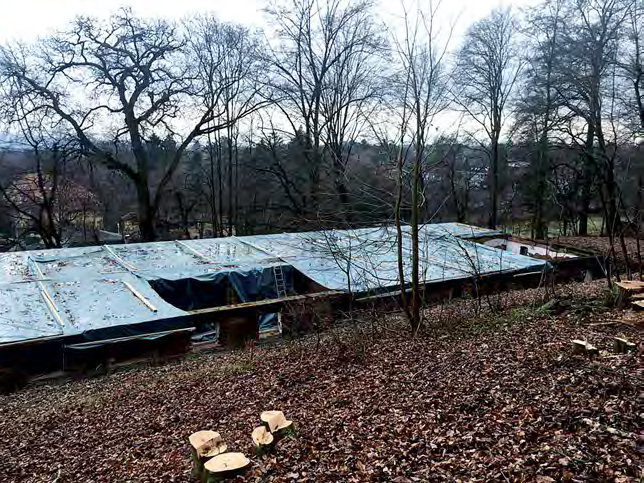
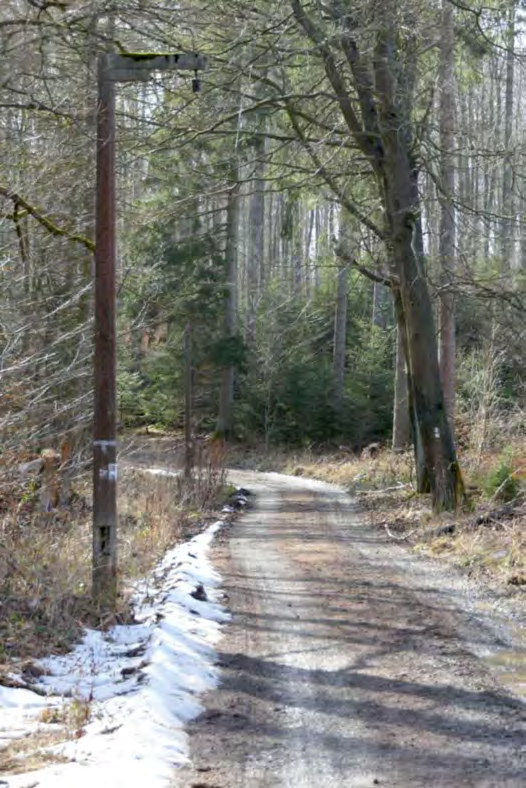
The motifs of the lanterns in the forest in two paintings belonged to the subcamp area of the Hirschhagen concentration camp, Hessisch Lichtenau. The Kassel Druseltal concentration camp was built as a subcamp of Buchenwald in 1943.36 The motif of the painting of the barracks for SS administration on Panoramaweg, which were built using forced labor, was created in 2020. You can see the dilapidated remains of the building that are being swallowed up by a construction site. Now nothing can be seen and the history of the place remains invisible. Instead, the state department of the Hesse Forestry Office is now located there.
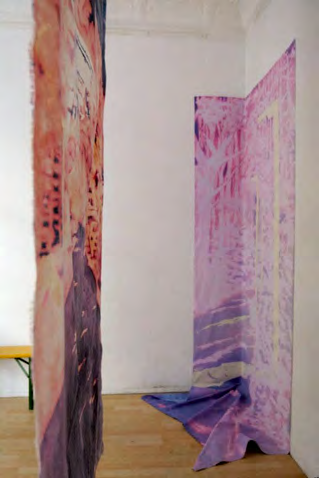
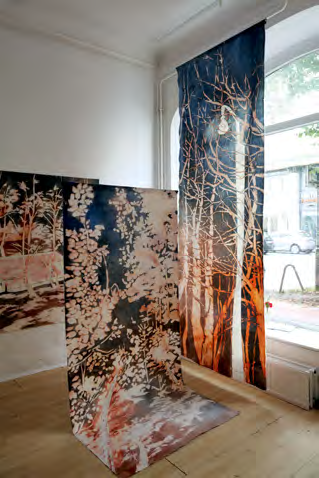
These are just a few examples of countless of these places that can be found everywhere and whose traces can be recognized if one has "used" to seeing them through the phenomena of affectation described at the beginning in (artistic) work with archives and histories. The 5 motifs were painted using ink and bleach. The traces – the lanterns, the rails, the parts of the building – remain as empty spaces. A sound installation that was played on two channels in the room, sometimes coming from one corner and sometimes the other, interrupting each other, mixing and falling silent again: footsteps on the forest floor, rustling leaves in the wind, street noise. They are recordings that were recorded at the painted locations and show what can be heard when you visit them.
But what happens when these places are discussed in pictures? The controversial quote from Theodor W. Adorno "Cultural criticism finds itself confronted with the final stage of the dialectic of culture and barbarism: writing a poem after Auschwitz is barbaric, and that also eats into the knowledge that explains why it became impossible to write poems today." 37 from his essayCultural Criticism and Society from 1949, was often misunderstood as a fundamental ban on continuing to produce art and culture after Auschwitz, and often like that interpreted that the Holocaust cannot be represented (neither in the form of poems or literature, nor in other art genres). The aestheticization of places of Nazi terror is definitely worth problematizing and is a question that always arises when dealing with motifs in visual art. The paintings attempt to break with aestheticization and instead achieve an affective-political dimension to the paintings. This break arises through different parts of the painterly approach. Dyeing and bleaching the fabric reverses the usual painting process of applying pigments, adding them rather than subtracting them. In this way, as in an inversion, the ratios of light and dark are reversed. This allows associations with infrared or thermal imaging. Where the afterlife condenses (or life in thermal imaging, the places where most of the heat comes from), the images become brighter right down to the traces, which then remain empty spaces. The association and reversal of the color ratios, as well as the color combinations of blue, magenta, red and orange tones created during bleaching, which become lighter depending on the intensity of the bleaching process, create an unreal, eerie atmosphere that is intended to reflect the feeling that arises that something is not right in one place, thatsomething was everywhere. There is also a physical afterlife inherent in the images. They change over time and depending on the lighting conditions they are confronted with. Faded areas become lighter and form bright yellowish, fluorescent-looking edges. Working through the image motifs and the associated intensive examination of their stories and contexts, as well as the resulting questions and demands on how to deal with them, develop a strong affective power in the process of painting, which can also be transferred to those who see the images on display. The artistic practice strives to use painterly strategies to contribute to updating history, activating memory and thus evoking a shift in perception.
Augmented reality
In addition to the listing, another planned part of our project will be the processing of the sites using augmented reality (AR). At the level of artistic-scientific research, AR offers comprehensive opportunities to merge time periods and expand the current reality to include the past. The aim here is to virtually reconstruct buildings (concentration camps, forced labor camps, barracks, etc.) that were at the sites and then to be able to place them in their respective locations in the present. The most precise geographical location possible, which we obtain from our terrestrial data, is crucial here. The AR processing is based on the cartographic archive and requires extensive research, especially regarding the reconstructability of the locations. For this purpose, photographs of the camps after the liberation and aerial photographs are required. Thanks to the very extensive archive of the United States Holocaust Memorial Museum, which makes photographic material available for use, we are working out how virtual “reconstructions” could be useful and effective with regard to and for digital memory work on voids and sites.
Using AR, avArc wants to make this past visible and make knowledge, material, sources, everything that is constantly growing in avArc's affective archive accessible - and also point out if this information is missing on site.
Participate, participate, help shape
We would like to use the platform of the Affective Archive and make it available to expand and share memories of the stories of historical places. In her article “The Body as the Medium of individual, collective and cultural memory,” Aleida Assmann describes the media of cultural memory explored by Diana Taylor through the concepts of performance and repertoire:
»Repertoire is an embodied collective store of knowledge that individuals in a group can access. One can participate in it actively by singing a song and all its verses, for example, or passively by humming along to the melody.«38
With these thoughts on contributing and participating in activations and renewals of memory, we would like to finally focus once again on a central part of the project: on the community that makes such a large, far-reaching and long-term project possible. It would not be feasible and also pointless to design this project alone, because it requires the perspectives and voices of many as well as their resources and professions to achieve the implementation of the concept.
Notes
- Aleida Assmann, The transforming power of remembering, in: Jürgen Moltmann, The Secret of the Past, Berlin 2012, 81.
- Website of the homepage of the “avArc” project, URL: https://avarc.org/ (accessed March 31, 2022).
- Note: Since the 2000s, artistic research has increasingly found its way into discourses as an interdisciplinary field between art and science and has been institutionalized at training centers for artists and art academies since 2010. Since then, the opportunities and problems of artistic research and its significance for science have been discussed in many ways as a method and practice. In her 2011 article “What is Artistic Research?” Julia Klein rightly writes that art and science cannot be viewed as separate from one another but rather as “two dimensions in a common cultural space.” Quoted from Julia Klein, What is artistic research?, in: kunsttexte, Vol. 2/2011, 2, URL: https://edoc.hu-berlin.de/bitstream/handle/18452/7501/klein.pdf?sequence=1&isAllowed=y (accessed March 31, 2023). According to Klein, artistic research cannot be categorically distinguished from scientific research, since the pursuit of knowledge is inherent in both approaches. Artistic research can be scientific research at the same time and is therefore often characterized by interdisciplinarity. The processing of research questions in artistic processes does not always result in generally valid, secure knowledge, but can be subject to the same reflection processes and generate knowledge that would not be possible with other methods. The physicality and sensuality of artistic knowledge, “embodied knowledge,” is a feature of artistic research. See ibid., 2–3. “The knowledge that artistic research strives for is a felt knowledge,” i.e. one that in some cases evades description or categorization, is not tangible and yet contains a strong affective potential. Ibid., 3.
- This conscious or unconscious suppression and prevention of memory can be observed again and again, for example when historical places are sold and then used privately. An example that we will talk about in this text is the former Kaufering I concentration camp, one of 11 subcamps of the Dachau concentration camp in Landsberg am Lech. See Wolfgang Benz and Barbara Distel: The Place of Terror. History of National Socialist concentration camps, Vol. 2, Munich 2005, 360–366. The area on which the camp was located is now used as a commercial area, partly including the historical buildings of the Dynamit AG ammunition factory, which were built using forced labor by concentration camp prisoners. Remembering is also structurally prevented, for example by right-wing parties like the AfD in Germany and their historical revisionist ideologies.
- Wolfgang Benz, in: Wolfang Benz/Barbara Distel, The Place of Terror. History of National Socialist concentration camps, Vol. I, Munich 2005, 11.
- In this formulation, we agree with a statement that Andrea Hubin, Karin Schneider, Nora Sternfeld and Julia Stolba wrote as part of an article on the anti-Semitic and racist image program in the period 1880-1933 and the role of Art Nouveau and which will appear later this year in the conference publication "Taste Formation in the Age of Nation Building" of the Institute for Art History at the Friedrich-Alexander University Erlangen-Nuremberg: »Following the convention in English and French, we choose the terms “Nazis” or “Nazism” for the Nazi worldview and political movement. In addition to a conscious decision in favor of the exile and allied designation, it is also one against the self-designation of the NSDAP and the associated apparent connection between nationalism and socialism. We owe it to Ernesto Laclau for pointing out the peculiar persistence of the long word "National Socialism" in post-Nazi German usage, in contrast to most other linguistic contexts. Andrea Hubin/Karin Schneider/Nora Sternfeld/Julia Stolba, Which Youth? Which style? Two case studies in Vienna and Hamburg 1908, 2023 (unpublished manuscript), 2.
- Pierre Nora, Places of Remembrance in France, Munich 2005.
- Nora Sternfeld, Memories Achieved. Memorials as contact zones, in: Nora Sternfeld, The Radical Democratic Museum, Vienna 2018, 130–131. Using the concept of the contact zone according to James Clifford and Mary Louise Pratt, Nora Sternfeld develops theoretical foundations and methodological considerations for teaching history in dealing with National Socialism. The term itself goes back to Pratt, who used contact zones to refer to social spaces "where cultures meet, clash, and grapple with each other, often in contexts of highly asymmetrical relationships of power [...]." Mary Louise Pratt, Arts of the Contact Zone, in: Profession, ofession (1991), 33–40, 34.
- See Ibid., 136–144.
- Note: At this point we would like to thank Nora Sternfeld for this perfectly fitting pun, which describes exactly the artistic practice with which we want to intervene in the existing mapping.
- Giulia Palladini/Marco Pustianaz, Lexicon for an Affective Archive, Bristol 2016, 21.
- Michel Foucault, The Historical Apriori and the Archive (1969), in: Knut Ebeling, Stephan Günzel, Archivology. Theories of the archive in philosophy, media and the arts, Berlin 2009, 110.
- See Jacques Derrida, Dedicated to the Archive. Freudian Impressions, Paris 1995, 2.
- Ibid., 175.
- See Tom Waibel, What expresses affect, in: Bildpunkt (October 17, 2013), URL: https://www.linksnet.de/artikel/29796, (accessed March 31, 2022).
- Suely Rolnik, Zombie Anthropophagy. On neoliberal subjectivity, Vienna 2018, 46.
- Aleida Assmann, The transforming power of remembering, in: Jürgen Moltmann (ed.), The Secret of the Past, Berlin 2012, 82.
- Own translation from English »the historic agent of memory«, quoted. Okwui Enwezor, Archive Fever. Uses of the Document in Contemporary Art, New York 2008, 46.
- Suely Rolnik, Archive Mania/Archive Mania, in: Katrin Sauerländer (ed.), documenta notebooks, 100 notes - 100 thoughts, doCUMENTA (13), vol. 22, Kassel 2011, 34.
- See Ibid, 35.
- URL: https://www.ushmm.org/research/publications/encyclopedia-camps-ghettos (accessed June 1, 2023).
- Of course, we are aware that many places have already been well and comprehensively processed, are being updated and that mediation work is being carried out there.
- See website “Minorities in Porz”, URL: http://minderheiten-in-porz.de/minderheitenbeta/main/produktionstagebuch/die_recherche/4_01_04/4_00_4.htm (accessed March 31, 2023). The website quotes Gebhard Anders, who wrote about the concentration camp in his 1982 article “The SA protective custody camp at Hochkreuz in Porz-Gremberghoven.” The article can also be found in the volume “Instrumentarium of Power, Early Concentration Camps 1933–1937,” edited by Wolfgang Benz and Barbara Distel, Berlin 2003, 179–18.
- See Andi Goral, What will become of the former wild SA protective custody camp “Am Hochkreuz” in Cologne-Porz?, in: report.K.de Internet newspaper Cologne (December 30, 2022), URL: https://www.report-k.de/was-wird-aus-dem-ehemaligen-wilden-sa-schutzhaftlager-am-hochkreuz-in-koln-porz/ (accessed March 31, 2023).
- By this we mean the area in the sense of an “inner map” where we have an idea of how much space a certain topic takes up. The problem we see when places are repurposed without making reference to history is that this can give rise to an idea across society that the crimes of the Nazis were "bundled" at large memorial sites and took place primarily in the "large concentration camps", which is not correct.
- Marianne Hirsch, The Generation of Postmemory. Writing and Visual Culture After the Holocaust, New York 2012, 2.
- See ibid., 4.
- See website of the “Initiative Dessauer Ufer”, URL: https://initiativedessauerufer.noblogs.org/das-lagerhaus-g/geschichte/ (accessed March 31, 2023).
- Website of the homepage of the “avArc” project, URL: https://avarc.org/ (accessed March 31, 2022).
- Website of the community platform of the “avArc” project, URL: https://community.avarc.org/ (accessed March 31, 2022).
- Website of the knowledge base of the “avArc” project, URL: https://archive.avarc.org/ (accessed March 31, 2022).
- Note: At this point, Hannah Arendt's concept of power is meant: "But no one actually has power; it arises when they act together and it disappears as soon as they disperse again," Hannah Arendt, Vita activa or from active life, Munich 1967, 282-283.
- Quoted from Eva Schulz-Jander, Memory has no shape, on the website of the artist Horst Hoheisl: https://www.hoheisel-knitz.net/index.php?option=com_content&task=view&id=30&Itemid=32 (accessed March 31, 2023).
- This text is copied from the image of the memorial plaque included in the Wikipedia article on the scrap fountain. URL: https://de.wikipedia.org/wiki/Aschrottbrunnen#/media/File:Aschrottbrunnen_Gedenktafel.JPG (accessed March 31, 2022).
- See Wolfang Benz and Barbara Distel, The Place of Terror. History of National Socialist concentration camps, Vol. 2, Munich 2005, 366.
- Website of the project »Buchenwald was everywhere. Network of external camps", URL: https://www.aussenlager-buchenwald.de/details.html?camp=43 (accessed March 31, 2022).
- Theodor W. Adorno, Prisms. Cultural Criticism and Society (1951), in: Theodor W. Adorno, Cultural Criticism and Society I. Collected Writings. Volume 10.1, Darmstadt 1998, 30.
- Aleida Assmann, The Body as the Medium of individual, collective and cultural memory, in: Academy of the Arts, Berlin (ed.), Journal der Kulturen, No.12, English issue, March 2020, 12–17.